There’s this moment in a recent interview with Strauss Zelnick that keeps coming back to me. Zelnick runs Take-Two Interactive — the company behind GTA, Red Dead Redemption, Civilization, Borderlands, and BioShock — so when he talks about AI he’s talking from the top of a creative empire, not a venture deck. About 90 minutes in (1:34:22 if you want to skip ahead), he says this:
“Remember what AI is, despite the fact that there are people in Silicon Valley who don’t want you to believe this, is big data sets, lots of compute, and a large language model mushed together. That’s what they are. So, data sets by their very nature are backward looking. Creativity by its very nature is forward looking.”
Backward looking versus forward looking. That one sentence does more work than most of the AI discourse I’ve read in the past year, and the reason it landed for me is that I sat through about thirty years of creativity research that says exactly the same thing — just dressed up in more academic language.
Both sides of the AI debate are half wrong. The doomers point at real risks, the dismissers point at real failures, but neither one lands the synthesis. And the architecture itself tells you why.
AI data processing vs. human cognition
The Backward/Forward Distinction
I studied Music Informatics at Sussex under Professor Nick Collins during the peak of Margaret Boden’s creativity research, and got to see her lecture for my Generative Creativity course — one of the highlights of that degree. She’d already formalised the distinction Zelnick was gesturing at, decades earlier.
Boden’s framework is a three-mode taxonomy: combinatorial creativity (mixing known ideas), exploratory creativity (navigating known conceptual spaces), and transformational creativity (generating concepts outside the distribution). She developed it across The Creative Mind (1990), extended it in a 1998 paper, and consolidated it in the 2004 second edition, before popularising it for the AI community in Computer Models of Creativity (2009).
Here’s the thing: LLMs do combinatorial well. They remix, they interpolate, they produce statistically plausible recombinations of what they’ve already seen. That’s both the floor and the ceiling.
Franceschelli & Musolesi (2026) call this “functionalist creativity” — outputs that look creative from the outside but “lack key aspects of ontological creativity,” meaning the deeper processes and social dimensions of genuinely novel work. Saakyan et al. (2025) drove the same point home with a paper called “Death of the Novel(ty)”: what reads as novelty in LLM output turns out to be mostly n-gram diversity. Statistically unusual, not transformational.
None of this is a bug — it’s the architecture. AI is backward-looking by construction. It’s a compression engine for everything that’s already happened, and a system trained to predict the next token from past corpora isn’t going to invent a new genre. That doesn’t make it useless, it just makes its useful range specific.
The same engine that can’t originate a movement turns out to be remarkably useful for the people who already have forward-looking ideas and need help shipping them faster.
Where Each Camp Gets It Half Right
Camp 1: “AI will replace human creativity.” The fear here is real, widespread, and measurable. A Reuters/Ipsos poll in August 2025 found 71% of Americans fear AI causing permanent job loss. The Ipsos AI Monitor 2025 found that across 30 countries, 1 in 3 people expect AI to replace their own job within five years. Pew Research is tracking 50% of Americans as more concerned than excited about AI, up from 37% in 2021. Microsoft and LinkedIn’s Work Trend Index in 2024 found nearly half of professionals worry AI will replace their jobs.
The fear isn’t baseless either. A meaningful share of creative work is recombination, and LLMs are very good at recombination. But the position quietly conflates two different things — jobs in creative industries on one hand, and the human capacity for creativity itself on the other — and those aren’t the same thing at all. The leaps that produce new genres, new movements, new ways of seeing don’t come from averaging past experience. So: right about productivity disruption, wrong about transformational work.
Camp 2: “AI only produces slop, so it’s worthless.” The backlash is just as real. The BBC reports that AI slop is transforming social media and that a public revolt is brewing. “AI slop” is now an established dictionary term. Shaib et al. (2025) formally defined it as low-effort, high-volume, statistically average output that nobody bothered to edit. The problem is real, it’s visible, and the platforms themselves are now fighting it. But what it describes is bad uses of AI, not all AI output — and every prior creative technology surfaced exactly the same confusion.
Every transformative technology runs the same cycle:
- Photography (1839) — “From today, painting is dead,” said Paul Delaroche. Painting survived. It just stopped trying to be a photocopier and gave us Impressionism, Cubism, abstraction.
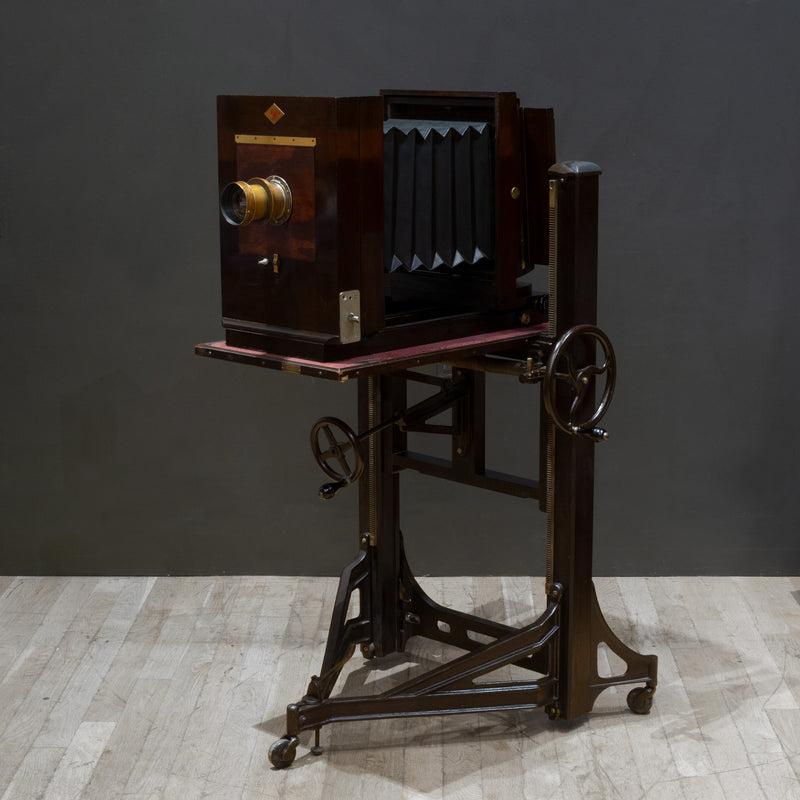
Photography: 19th Century
- Synthesisers (1970s) — “Real musicians are dead.” Then came Xenakis, Glass, Eno, Kraftwerk, Aphex Twin. New genres followed.
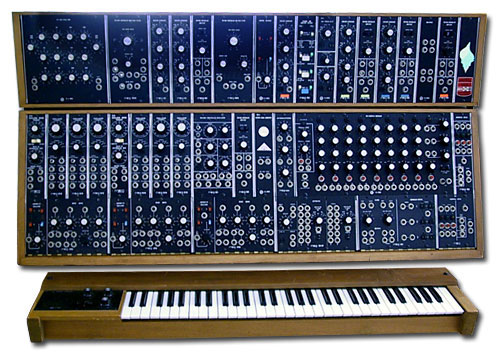
Synthesizers: 1960s
- CGI (1990s) — “Practical effects are finished.” The best modern films use both. Nolan shoots practical where it matters; Dune uses CGI deliberately.
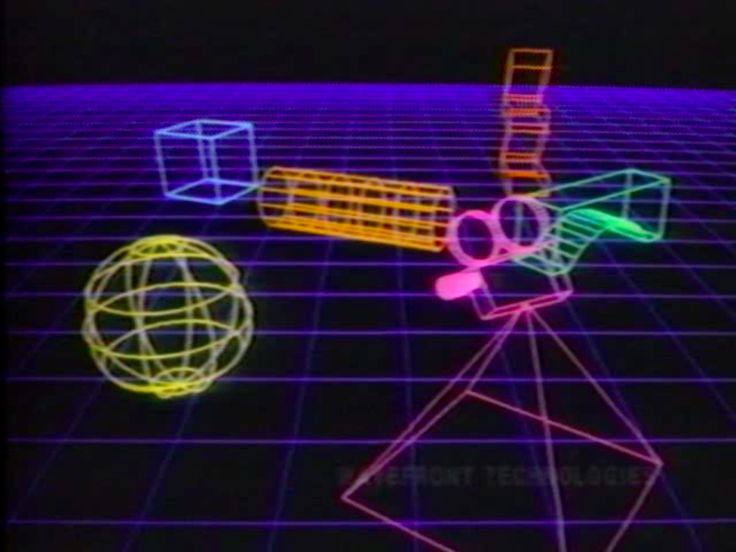
CGI: 1990s
- Auto-Tune (1998) — “Real singing is dead.” Now it’s just another production tool, and Jacob Collier uses it as an expressive instrument.
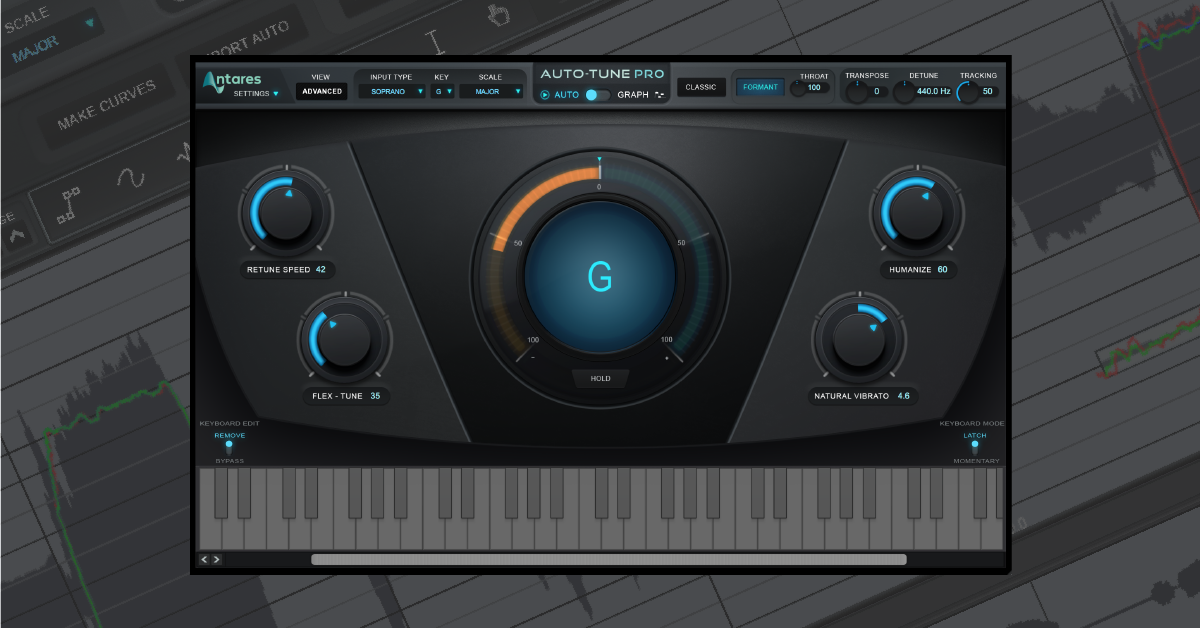
Auto-Tune: 1990s
The pattern is the same every time: Fear → Adaptation → Integration. The masters learn to use both.
The Technology Adoption Cycle
The pattern is entirely predictable because human resistance to changing mediums is a constant. First, the old guard rejects the new tool as soulless or illegitimate (fear). Then, early adopters break it, push it past its intended limits, and figure out what it’s actually good for (adaptation). Finally, the tool dissolves into the background, becoming invisible infrastructure so ubiquitous that creating without it seems absurd (integration).
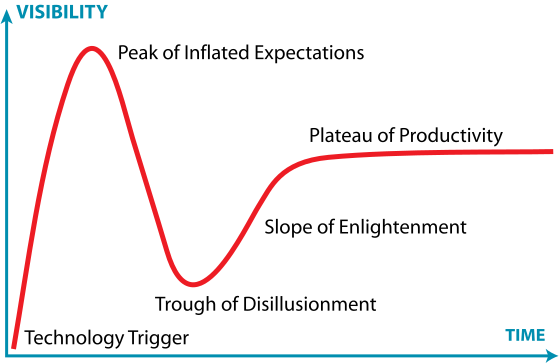
The predictable cycle of technology adoption
The Slop Problem Is a Taste Problem
The internet is flooding with AI-generated content right now. Low-effort blog posts, generic images, uncanny-valley video. It’s terrible, it’s annoying, and honestly it’s going to stay that way for a while.
Here’s the paradox, though: when the cost of making things approaches zero, the cost of making something worthwhile actually gets harder.
Bhaskar’s “Curation Is the New Creation” nails this — when anyone can generate anything at negligible cost, the ability to select, refine, and judge becomes the scarce resource. Baltes et al. (2026) frame the same dynamic as a tragedy of the commons for software, and the logic generalises: when the barrier drops to zero, the commons fills with noise, and the premium shifts to signal.
This isn’t the end of creativity. It’s the end of unpaid curation. The people who thrive in this environment will be the ones with real taste — the ones who can look at twenty AI-generated outputs, pick the one worth keeping, and then spend real time shaping it into something that matters.
AI Is a Tool
The least exciting framing turns out to be the most accurate one.
AI is a tool. It’s good at some things and bad at others, much like a camera, a synthesiser, or a text editor. It doesn’t replace the craftsman — it amplifies, or exposes, the craftsman’s ability.
Huang et al. (2024) found exactly this: AI augments high-skill workers and deskills lower-skill ones. If you’re good at your craft, AI makes you better. If you’re mid, AI just makes you faster at being mid. The tool doesn’t give you taste.
Liu et al. (2024) ran a seven-day study with 61 students and then followed up 30 days later, and there are two findings worth sitting with. When ChatGPT was taken away, creativity reverted to baseline — the boost didn’t stick. And worse, the homogenisation persisted. Even after the tool was gone, the output stayed flatter and more samey than it had been before. Lean on the remix engine long enough and you start sounding like the average of its training corpus.
Linus Torvalds put it well about Copilot: “The job isn’t writing code, it’s understanding what the code should do.” That’s true in every creative domain. The AI generates raw material; it can’t decide what’s worth making.
Real Examples, Real Results
There’s plenty of AI-assisted work that’s actually good, and it’s worth looking at who’s doing it.
Rie Kudan won Japan’s Akutagawa Prize in 2024 with a novel written partly using ChatGPT. She’s been completely open about the process — about 5% of it was AI-assisted, and the AI mostly handled research and phrasing. The story, the characters, the emotional arc — all her. Her response to the controversy was exactly the right one: “I plan to continue to benefit from AI in my writing.”
Holly Herndon built her own AI, “Spawn,” and made the album PROTO with it as a collaborator. The AI didn’t replace her voice, it extended it. The result is experimental, unsettling, and unmistakably human.
Refik Anadol feeds massive datasets to AI models and produces installations that ran at MoMA. The AI processes the data; Anadol designs the experience. Without his curatorial vision, it’s just noise on a wall.
In every one of these cases, the AI didn’t supply the vision — it accelerated the execution. The person, with taste and intent and something to say, stayed at the centre.
What This Means for Creators
The doomer framing tells creators they’re replaceable. The hype framing tells them they’re obsolete if they don’t adopt every tool by next quarter. Neither one matches the evidence.
Zelnick’s diagnosis holds at every level of scrutiny. The model is backward-looking by construction — a compression engine for everything humanity has already made. Boden mapped this decades before LLMs existed: AI hits its ceiling at combinatorial creativity. Transformation sits above that ceiling, and always will.
Which makes both camps straightforward to diagnose. The doomers are right that the recombinative layer of creative work is genuinely vulnerable — they’re wrong about transformation. The dismissers are right that most AI output is averaging-engine noise — they’re wrong that all of it is.
The examples make the distinction concrete, and the clearest ones come from outside the arts. AlphaFold solved the 50-year protein folding problem — earning Hassabis and Jumper the 2024 Nobel Prize in Chemistry — by building a bespoke neural network architecture, not by prompting one. GNoME discovered 2.2 million new stable crystal structures by running candidates through a custom graph neural network and a multi-stage training pipeline — a 45x expansion of known materials. FunSearch cracked open problems in mathematics by constraining an LLM to write code, not prose, then running an evolutionary loop to select only the solutions that checked out. None of these were prompting exercises. They were systems — architectures designed by humans, wrapped around a model that stayed backward-looking throughout. The transformation happened at the human layer.
Zelnick didn’t say AI is worthless. He’s all in on it at Take-Two — for efficiency, for asset creation, for freeing his developers up for the hard problems. He just never confuses that with making something worth playing.
Neither should you.
The artists, designers, writers, and engineers who define this era will be the ones who understand where the ceiling is — combinatorial, never transformational — and who do the work that sits above it. That work is still a human job. Increasingly, it’s a job that requires knowing how to build the scaffolding.
The model is backward-looking by construction. The scaffolding — the system you design, the taste you apply, the architecture you build around it — that’s where the forward-looking work lives. That part is still yours.